THATGUYABHISHEK
navigation

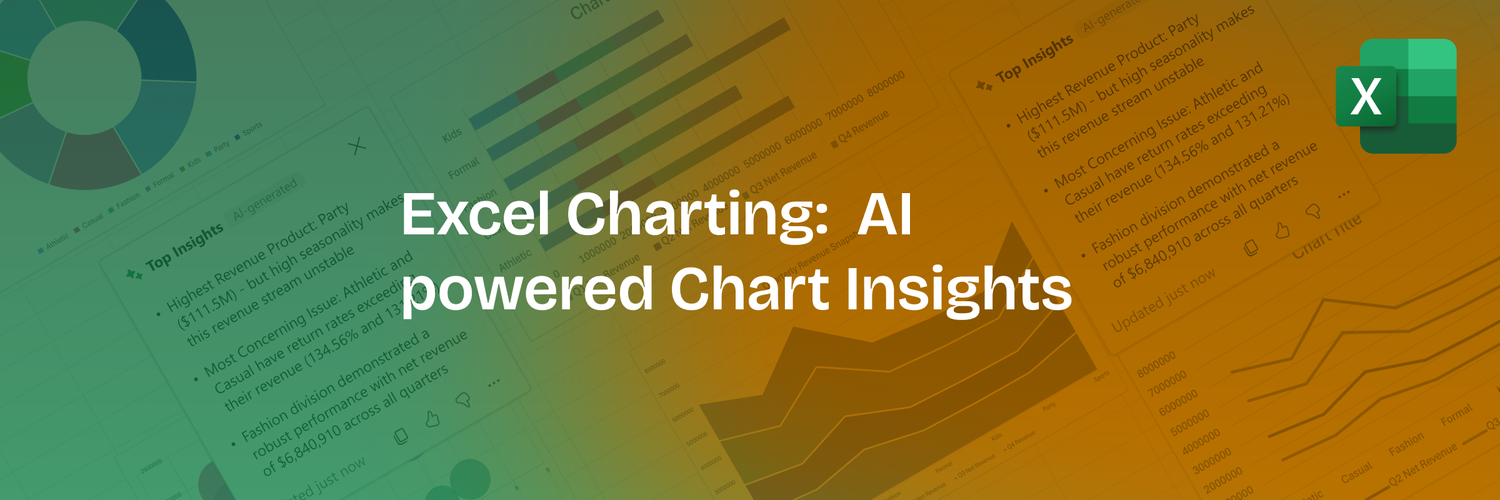
Excel Charting : AI-Powered Chart Insights

notion image

Introduction

Charts don't create value — insights do. Yet Excel forced users to manually interpret every visualization. As Lead Designer for Copilot Chart Intelligence, I designed an AI-powered system that automatically surfaces key takeaways the moment a chart appears. This post-insert 'aha moment' increased chart retention by 15%, validated Copilot's value for non-coders, and fundamentally repositioned Excel as an analytical assistant, not just a calculation tool.
 
 
Results Overview
15% Higher Chart Retention
65% Positive Feedback Rate
2x Copilot Engagement Lift
>95% Factual Accuracy

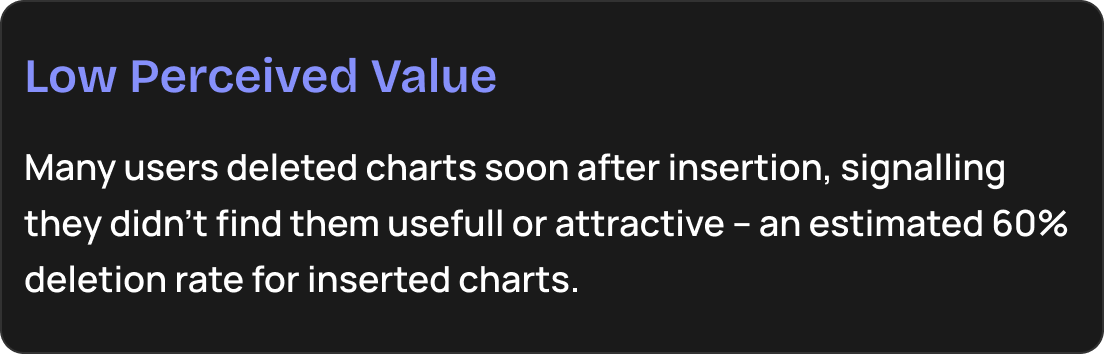
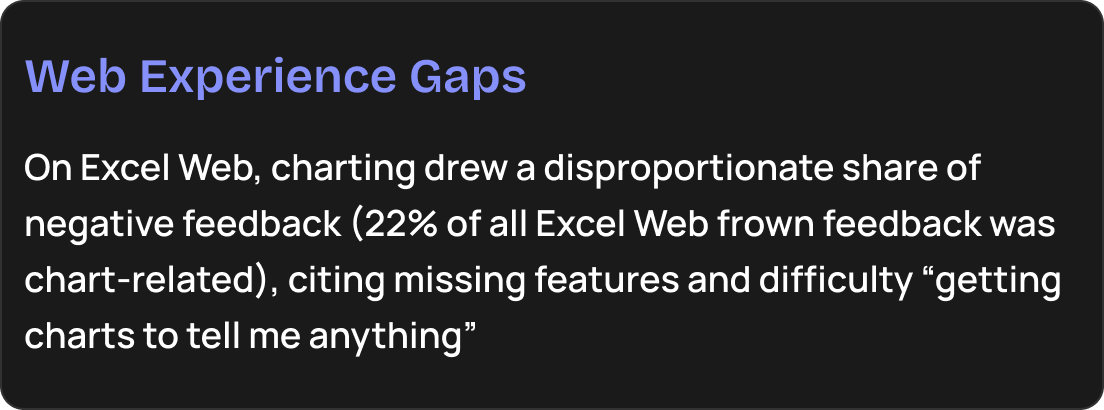
The Problem: Charts Without Context Are Decoration

notion image

What Users Were Telling Us

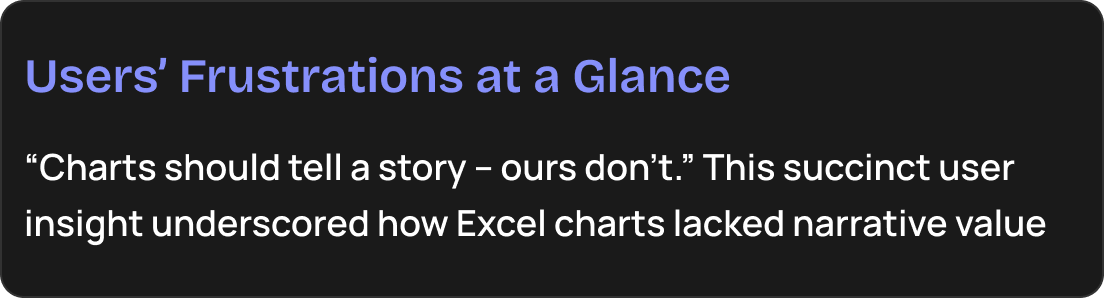
"The chart shows the data, but I still don't know what it means." — NPS Feedback
"I spend more time writing bullet points about the chart than creating it." — Enterprise User
"My manager asks 'so what?' and I have to explain manually." — Analyst
 

Why Competitors Were Winning

In our competitive analysis, tools like Tableau, Power BI, and AI-native platforms were delivering automatic insights:
Tableau: 'Explain Data' feature surfaced statistical anomalies
ChatGPT Data Analyst: Generated natural language summaries of uploaded CSVs
Google Sheets + Gemini: Proactive suggestions like 'This category is declining'
Napkin AI: Auto-generated visual explainers from text descriptions
CORE INSIGHT: Users weren't struggling to make charts — they were struggling to extract meaning from them. Excel gave them the 'what' but never the 'so what?'
 
CRITICAL GAP: Competitors understood that modern data viz isn't just rendering pixels — it's helping humans think. Excel was stuck in the old paradigm.
 

The Business Case for AI Insights

This wasn't just feature parity — it was strategic necessity:
  • Copilot adoption lagged in Excel (10.8% usage vs. 17.1% chart creators) — we needed a killer use case
  • Differentiation opportunity — Native, editable charts with AI insights beat static AI-generated images
  • User expectation shift — After ChatGPT, users expected ALL tools to 'explain themselves'
  • NPS driver — Charts that deliver insights immediately would boost perceived value


The Opportunity

Why Chart Insights, Why Now: These competitive insights underscored that to stay relevant and delight users, Excel had to infuse intelligence directly into charting. It wasn’t enough to improve the UI or add new chart types; the next logical step was a Copilot-driven experience where the moment a user creates a chart, the software adds value by explaining the data. Chart Insights became the vehicle to deliver that. Internally, this framing helped rally support: it was not just a good-to-have feature, but a strategic response to competition and a necessary evolution of Excel’s core experience. In presentations to stakeholders, the Excel team highlighted that competitors were turning charts into “visual narratives” – combining charts with insights and even action suggestions2. Excel’s vision needed to match and surpass that by leveraging Copilot’s advanced language and analysis capabilities. This competitive pressure added urgency and helped justify making Chart Insights a top priority (P0) for the upcoming development cycle.
 
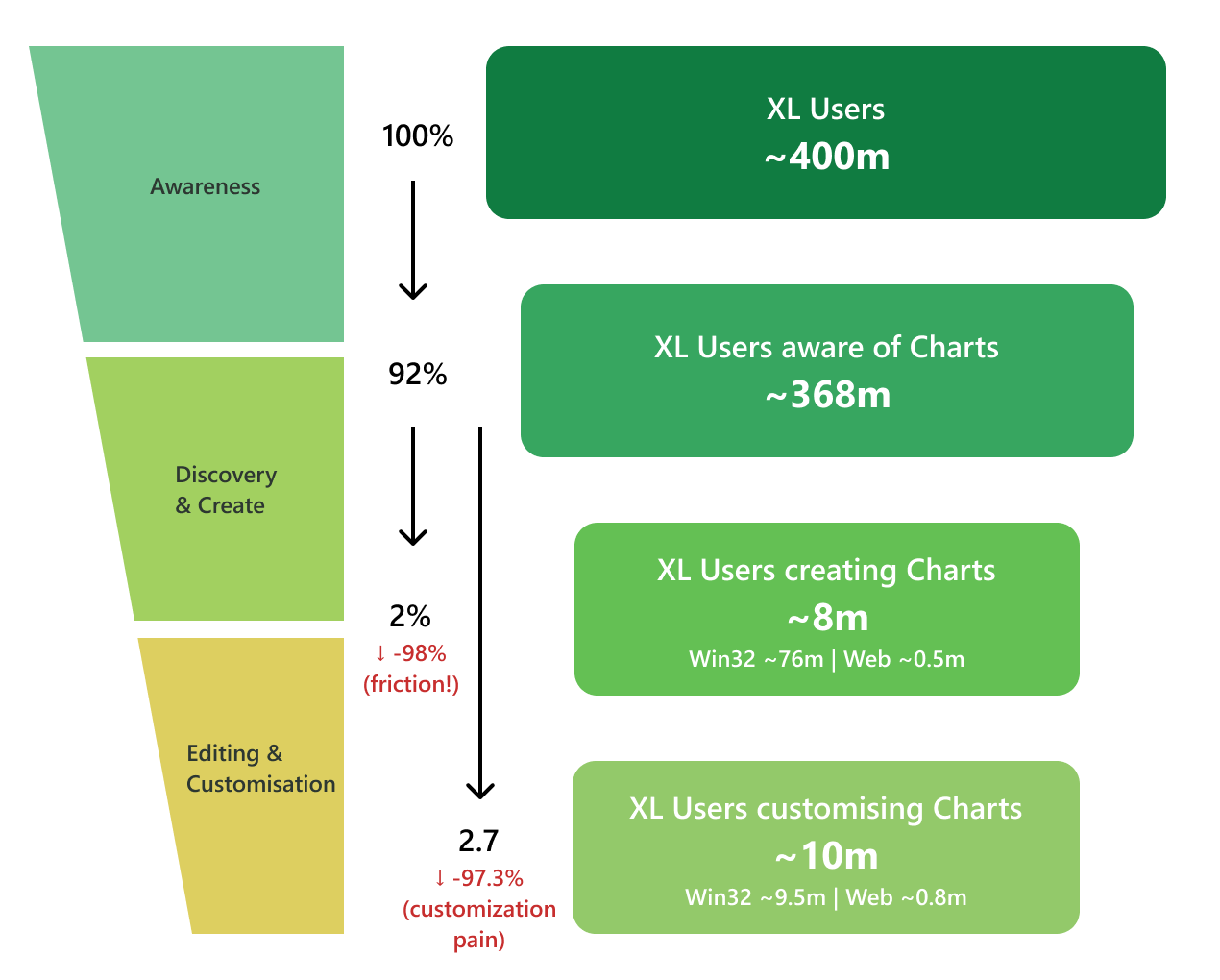
Metric
Value
Denominator
Meaning
2%
8M / 400M
Total Excel MAU
Overall market penetration
16.5%
4M / 24M
Copilot-enabled users
Chart usage among Copilot users
~11%
2.6M / 24M
Copilot-enabled users
Copilot usage among enabled users
5.5pp Gap
16.5 - 11 = 5.5
Activation opportunity
 
Among Copilot-enabled users, 16.5% create charts but only ~11% actively use Copilot features (November 2024 data). This 5.5pp activation gap represented a clear opportunity — users with Copilot access who chart frequently weren't leveraging AI features.
 
The Hypothesis: If we surface insights at the moment of chart insertion, users will find value in understanding their data immediately.
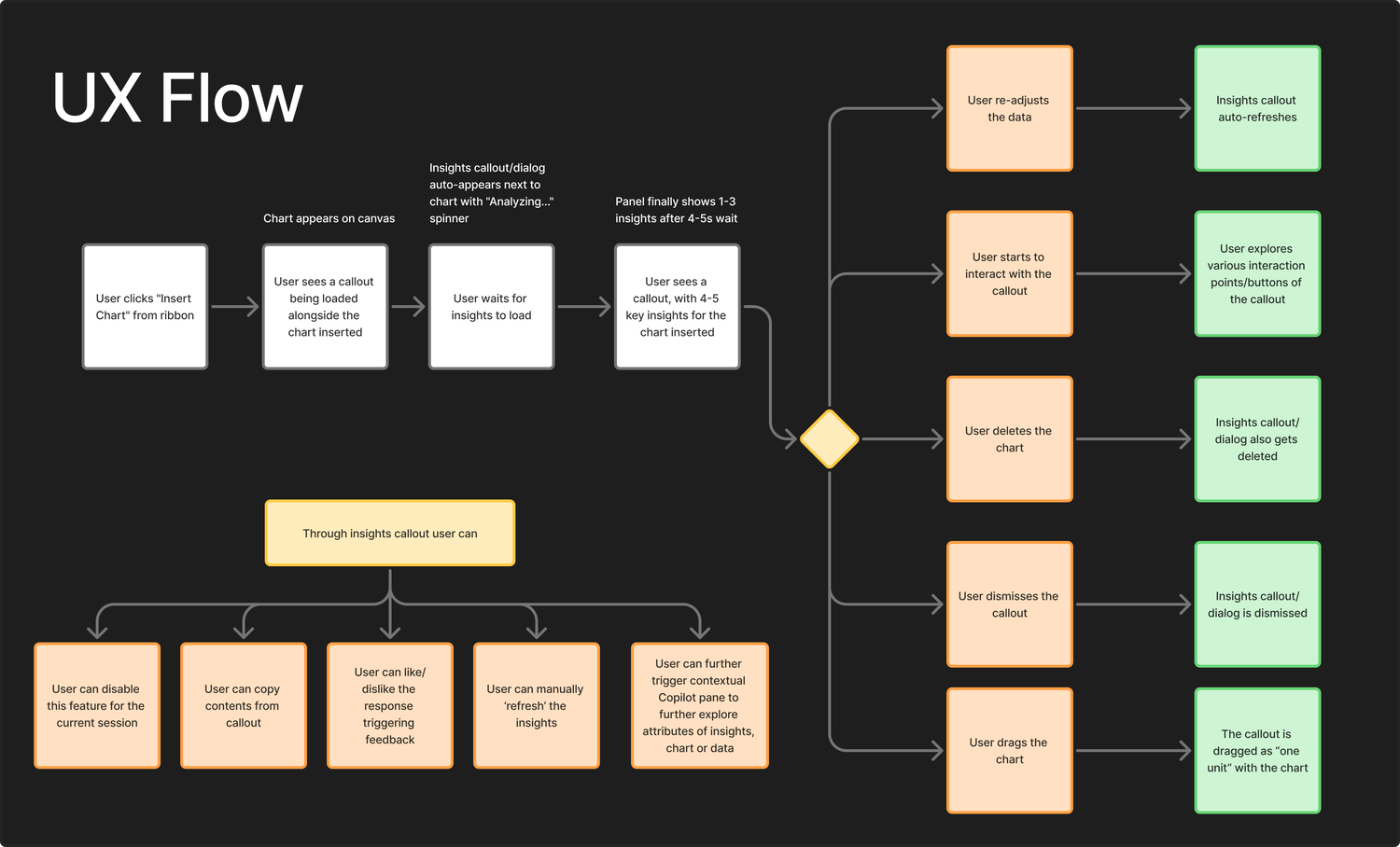
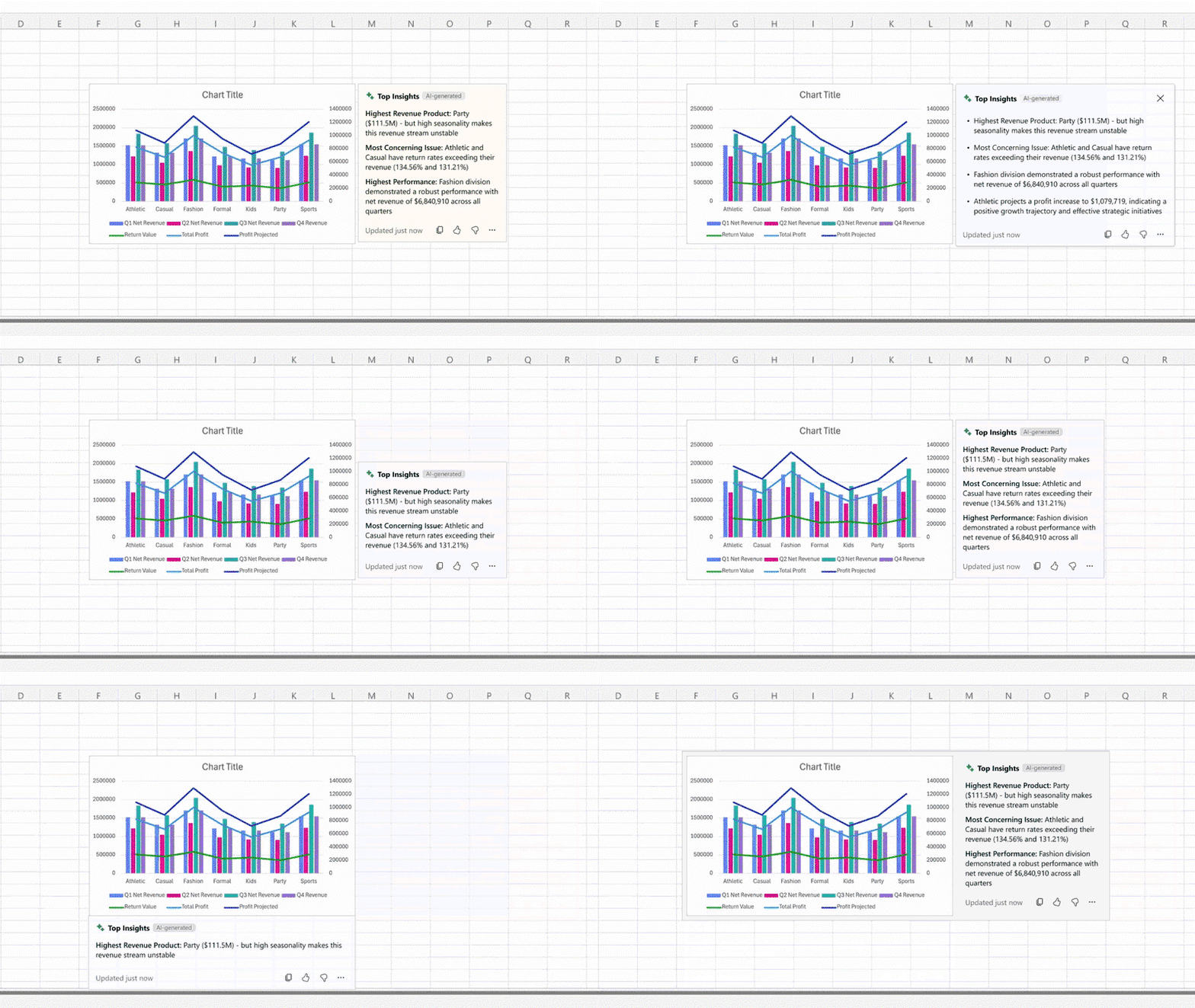
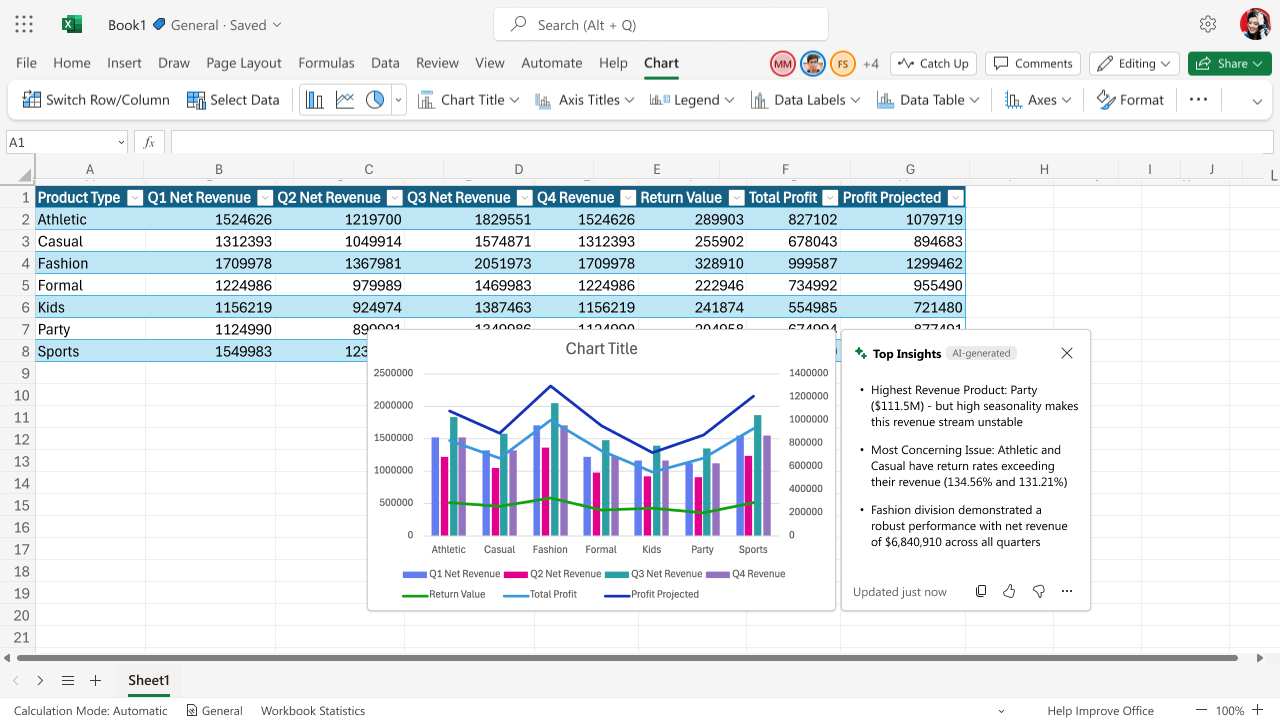
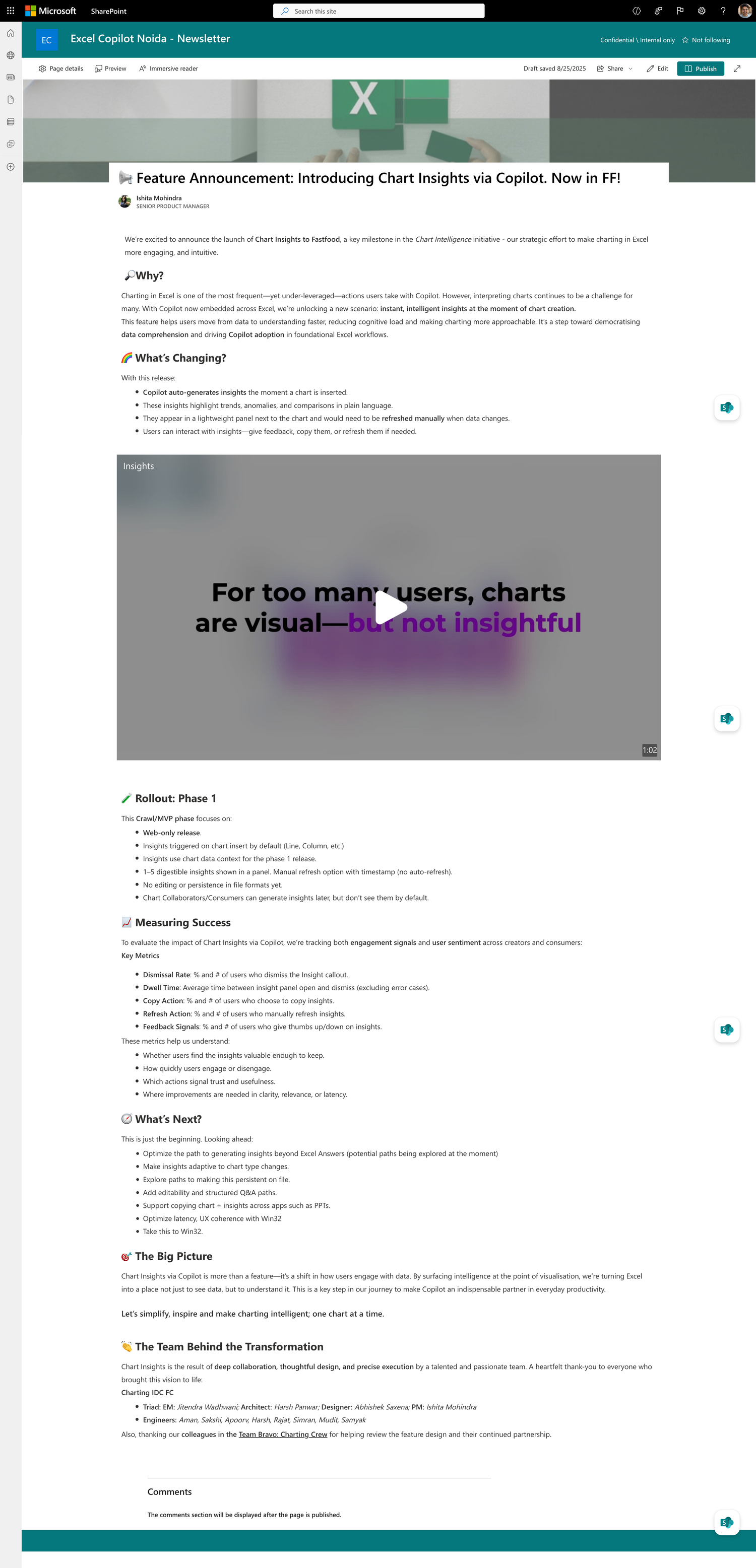
The Solution: Copilot Excel Chart Insights helps users instantly interpret data the moment a chart is inserted… surfaces key takeaways (growth patterns, anomalies, comparisons) right next to your chart… The feature simplifies analysis, saves time, and empowers users at all skill levels to make data-driven decisions directly in Excel.

My Role: Designing Intelligence, Not Just Interfaces

  • UX strategy for Copilot Chart Intelligence — defining what 'insights' meant for different chart types and user contexts
  • Cross-functional collaboration — partnered with AI/ML team, PM, and Data Science to shape LLM prompts
  • Information architecture — designed insight panel UI, interaction patterns, and refresh logic
  • Failure mode handling — what happens when AI can't generate insights? Graceful degradation patterns
  • Accessibility — screen reader support, ARIA labels, keyboard navigation for AI-generated content
  • Telemetry design — defining success metrics, instrumentation plan, and feedback mechanisms


notion image
 

Design Process: Crawl, Walk, Run

Crawl (MVP) — Prove the Core Value
Show static insights on chart insertion to validate whether automatic, immediate analysis delivers value.
  • Scope: Skittle button on chart insert (Web first), 1-3 insights, manual refresh
  • Constraints: Creator-only, no persistence, native charts only
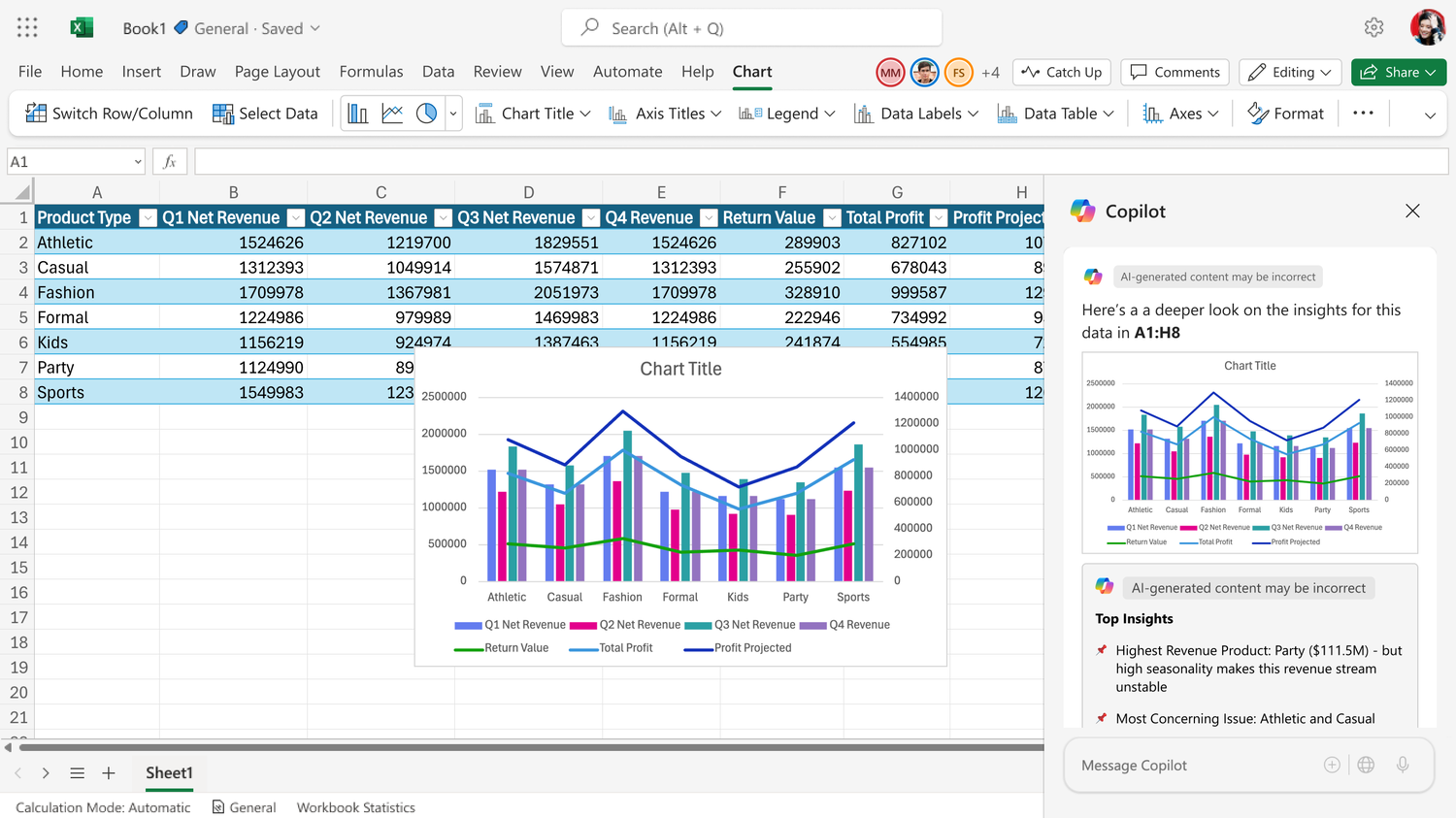
  • Interaction: Click → popover → thumbs feedback → Ask Copilot
  • Performance target: P95 <20s generation
  • Validation: A/B test for chart retention, Copilot activation
  • Success criteria: 40% click rate achieved vs. 20% target
Walk — Make It Interactive & Contextual
Enrich insights with responsiveness to chart edits and expand access to chart consumers.
  • Responsive insights: Auto-update when chart type/data changes
  • On-demand access: Right-click any chart → Generate Insights
  • Persistent insights: Save as chart property, visible to collaborators
  • Enhanced interaction: Copy text, "Explain why" button, hide individual insights
  • Platform parity: Win32, Mac support, multi-chart scenarios
  • Edge cases: Trendlines, empty charts, error recovery
Run — Deep AI Analysis & Storytelling
Transform insights into a conversational analytical assistant with cross-chart narratives and M365 integration.
  • Conversational analysis: Embedded Copilot chat with context maintenance
  • Cross-chart insights: Multi-chart narratives and high-level summaries
  • Visual highlights: Link insight text to chart elements (hover to highlight)
  • M365 integration: Send to PowerPoint with auto-generated slides
  • Advanced analytics: Predictive trends, correlations, diagnostic analysis, benchmarking
  • Vision: Excel as AI-driven analysis platform with intelligent partnership
    •  

The MVP


Key Design Decisions & Trade-offs

Auto-Trigger vs. On-Demand
Choice: Auto-trigger on insert (with easy dismiss)
Why: Testing showed users didn't know to ASK for insights. Making it proactive was key to discovery.
 
Inline Panel vs. Sidebar
Choice: Floating panel anchored to chart
Why: Sidebars compete with other UI. Inline feels contextual, less like 'another feature' and more like 'the chart explaining itself'
Manual Refresh Only
Choice: No auto-refresh on data changes
Why: Performance risk, user distraction, and testing showed users preferred control. They'll hit refresh when ready.
 
Thumbs Feedback Over Ratings
Choice: Binary thumbs up/down, not 5-star scale
Why: Lower friction, higher response rate. We cared more about volume of feedback than granularity.
 

Impact & Results

Quantitative Impact (Early Testing, FY25)
  • 15% increase in chart retention
  • Charts with insights 2x more likely to be kept vs. control group
  • 65% positive thumbs-up rate
  • Far above our 50% goal — users found insights genuinely helpful
  • 40% interaction rate with insight panel
  • Hovering, scrolling, or clicking — strong engagement signal
  • >95% factual accuracy
  • Manual evaluation of 500+ insights — no hallucinated numbers or false statements
Qualitative Feedback
  • "This is cool! I inserted a chart and Excel told me something I hadn't noticed." — Dogfood User
  • "The insights were relevant and saved me from writing a summary." — Financial Analyst
  • "Finally feels like Excel is smart, not just a calculator." — Power User
Critical feedback we addressed:
  • Some insights felt 'obvious' for simple data — tuned LLM to focus on non-trivial patterns
  • Panel sometimes covered data — adjusted positioning logic
  • Wanted ability to save insights to cell comments — added to Walk phase roadmap
Strategic Impact
  • Validated Copilot value prop — Showed AI adds value even for non-coders (chart users aren't Power Query experts)
  • Differentiated Excel in market — Only tool with native, editable charts + AI insights (Competitors had either/or)
  • Repositioned Excel as analytical assistant, not just spreadsheet
  • Unlocked future roadmap — Proved AI in charting works, green-lit Walk and Run phases
 

Key Learning

Prototype Latency Variations Earlier
Built for <5s latency, got >30s reality. Had to pivot mid-sprint.
Next time: Design for 10x slower than best case. Prototype with artificial delays (5s, 15s, 30s). Have backup pattern ready from day one.
Map Real Estate Conflicts Earlier
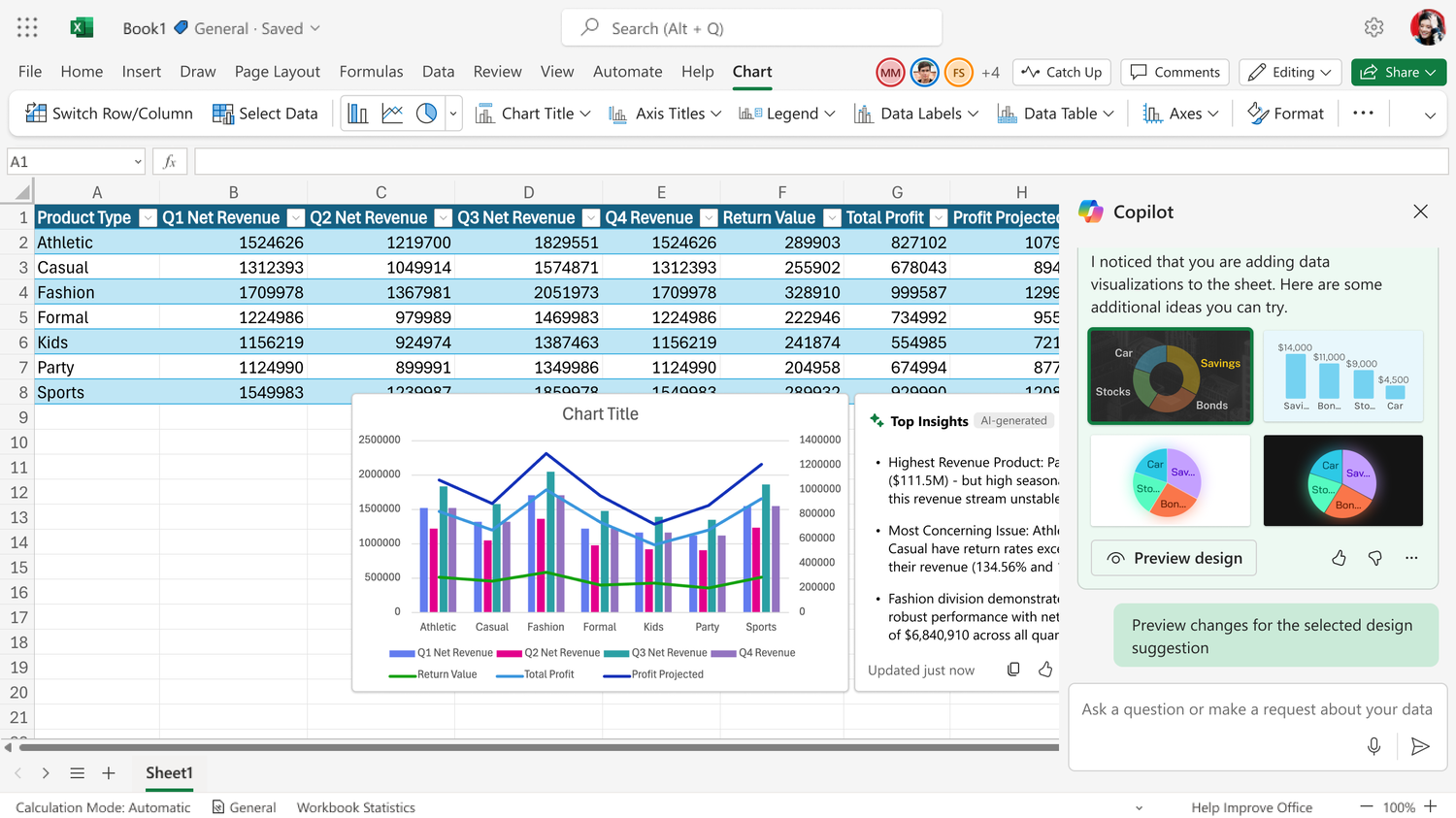
Designed in isolation, learned about Design Recs conflict late.
Next time: Audit all features that trigger on same event. Test on 1366x768 screens from day one. Involve PM in multi-feature roadmap alignment earlier.
Build Instrumentation Into Design From Day One
Defined metrics after design was done. Had to retrofit event tracking.
Next time: Create telemetry schema during wireframing. Every interaction state = logged event. Treat telemetry as a design deliverable.
Test With Messy Data From Day One
Tested with clean datasets (5 columns, 100 rows), shipped to messy reality (500 columns, formulas, merged cells).
Next time: Start with messiest data first. Create 'data chaos test suite' for prompt validation. Design failure states as prominently as success states.

The Bigger Lesson

AI features succeed when they
 
✅  Solve a clear job-to-be-done: Not 'AI for AI's sake' but 'help me understand my data'
✅  Appear at the right moment: Context matters more than capability
✅  Build trust through accuracy: One wrong insight destroys 10 good ones
✅  Empower, don't replace: Users still own the analysis; AI just helps them see faster
 
 
badge